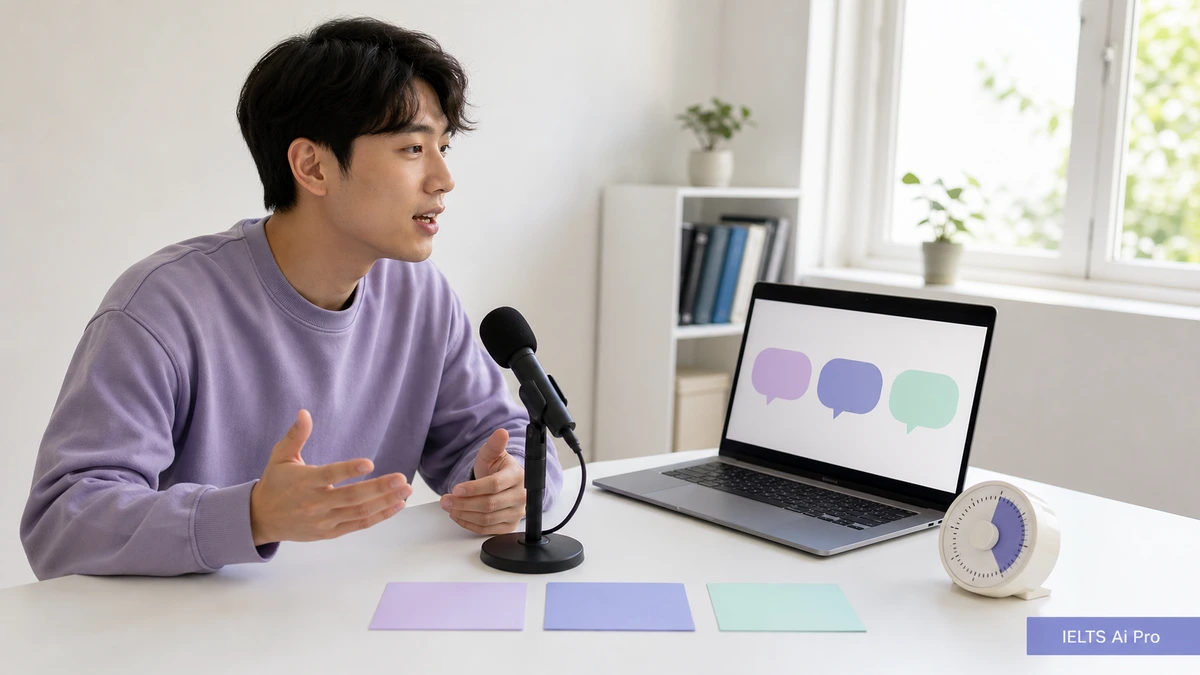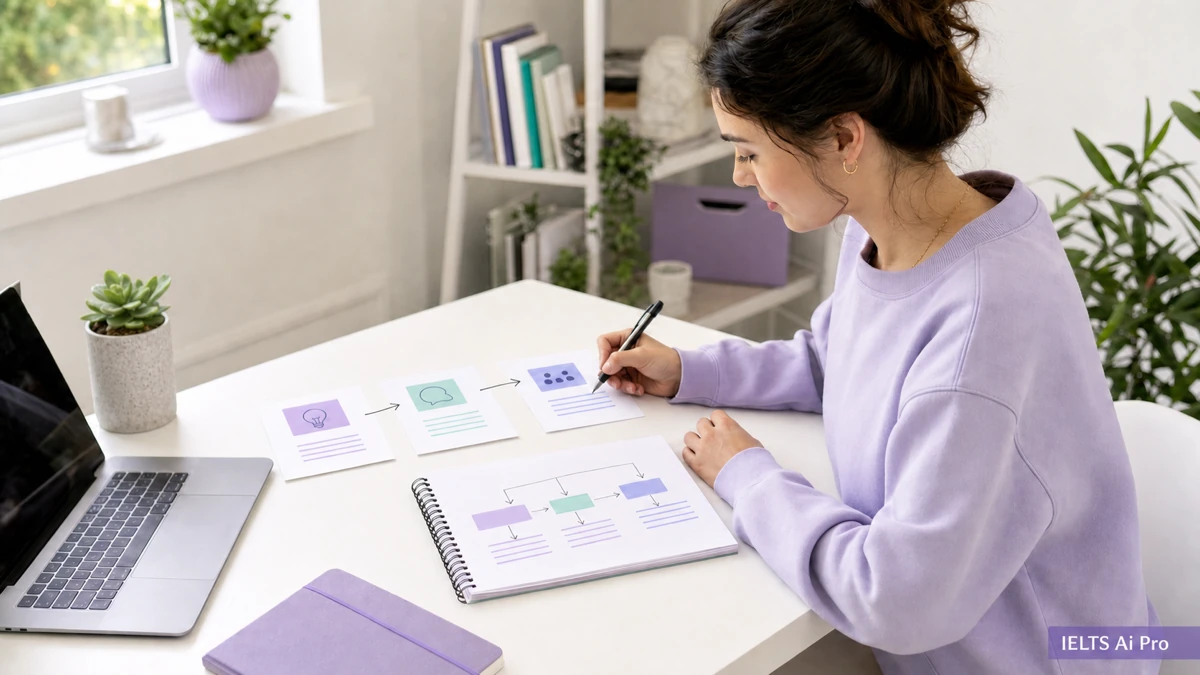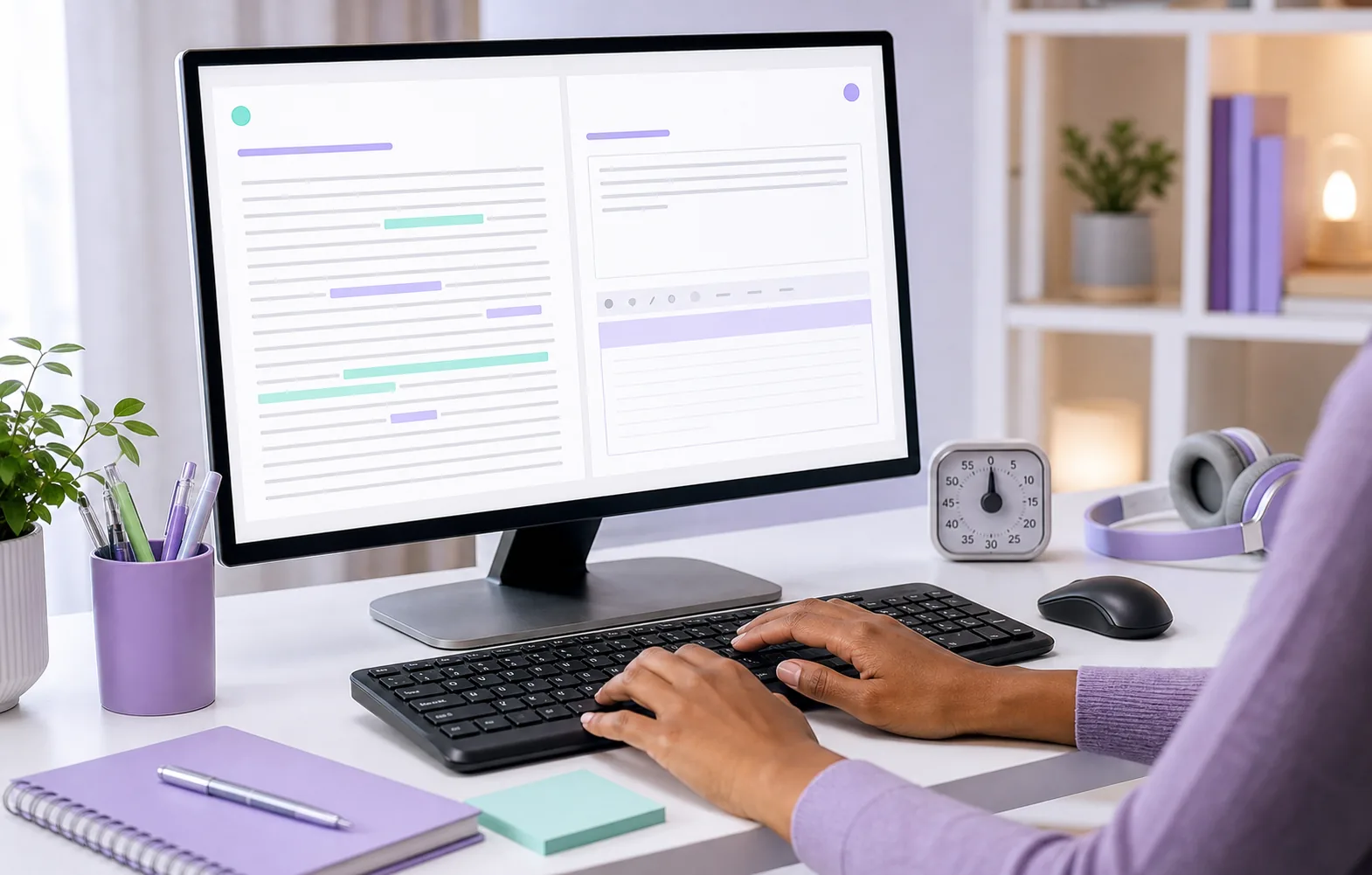
A recent IELTS candidate described losing time because typing felt unfamiliar and paragraph spacing was unclear. Other learners asked how the real computer test behaves after months of practising from books or on a tablet. These are not small concerns: the delivery method should feel boring by test day, so your attention stays on English.
Typing speed is not an IELTS assessment criterion. However, slow or inaccurate typing can stop you from finishing the language that examiners need to assess.
Start with a completion test
Do not chase an arbitrary words-per-minute target. Open a plain document and complete a 60-minute IELTS Writing simulation: about 20 minutes for Task 1 and 40 minutes for Task 2. Record whether you reached the minimum word requirements, finished both conclusions, and kept three minutes for checking. Your useful typing speed is the speed that supports a complete, readable response under pressure.
The 7-day computer-test plan
| Day | Focus | Practice |
|---|---|---|
| 1 | Baseline | Complete one timed Writing test and note unfinished sections. |
| 2 | Keyboard control | Type for 15 minutes without looking down; practise capitals, commas, apostrophes, and numbers. |
| 3 | Editing | Rewrite one paragraph using select, delete, and sentence movement without rebuilding the whole answer. |
| 4 | Screen Reading | Complete one passage using only on-screen scanning and highlighting. |
| 5 | Listening entry | Answer with headphones while checking spelling and word limits. |
| 6 | Full workflow | Complete Listening, Reading, then Writing with short planned transitions. |
| 7 | Retest | Repeat the Writing baseline and compare completion, errors, and checking time. |
Type in paragraphs, not one giant block
Press Enter once to separate paragraphs clearly. Avoid pressing Enter after every sentence, and do not create decorative spacing. A practical Task 2 answer usually has an introduction, two or three body paragraphs, and a conclusion. The visual separation helps you see whether each paragraph has one job.
Edit without creating new errors
Computer Writing makes revision easier, but uncontrolled editing can damage sentence boundaries or duplicate words. Use a three-level check:
- Meaning: does the sentence still answer the question?
- Grammar: did moving text break agreement, articles, or punctuation?
- Flow: does the sentence connect logically to the one before it?
Do not polish the introduction for ten minutes while the conclusion is missing. Complete the whole answer first, then improve the highest-value issue.
Build an on-screen Reading method
Practise keeping a mental map of the passage: purpose of paragraph A, change in paragraph B, evidence in paragraph C. Highlight short evidence phrases, not whole paragraphs. When a question is difficult, mark your best answer and move; returning with three questions unfinished is better than never reaching them.
Use the computer-based Reading practice and follow our 60-minute Reading strategy for passage-level timing.
Do not build strategy around unofficial interface claims
Community discussions often contain detailed claims about scratch paper, navigation, keyboards, or transition screens. Test-centre procedures and software details can change. Use official sample materials to learn the interface, read the instructions sent by your centre, and ask the invigilator when a test-day procedure is unclear.
Your final readiness checklist
- I can finish both Writing tasks on a physical keyboard.
- I can create and revise clear paragraphs without losing text.
- I can read a full passage on screen without printing it.
- I can enter Listening answers while maintaining attention to the audio.
- I have completed at least one realistic, uninterrupted session.
Start a timed Writing practice, then use Listening and Reading practice to make the screen workflow familiar. For the current delivery choices, also read our 2026 IELTS test-changes guide.
Source note
IELTS confirms that the questions and format are the same across paper and computer delivery; the difference is how you complete the test. Review the official ways to take IELTS page and your test-centre instructions before test day.